From spilt milk to a star map
How people worked out what the pale band in the sky really is.
How this site works. Every fact is in our own words and linked to its source, beside it. Where good sources disagree, we show each version in a “Sources differ” box.
Spilt milk
An ancient Greek story said the Milky Way was milk from the goddess Hera, spilt across the sky as she nursed the baby Heracles. Royal Observatory
Our word ‘galaxy’ comes from the Greek ‘galaxias’, meaning ‘milky’. Royal Observatory
In ancient Greece, Democritus suggested the band might be made of distant stars. Library of Congress
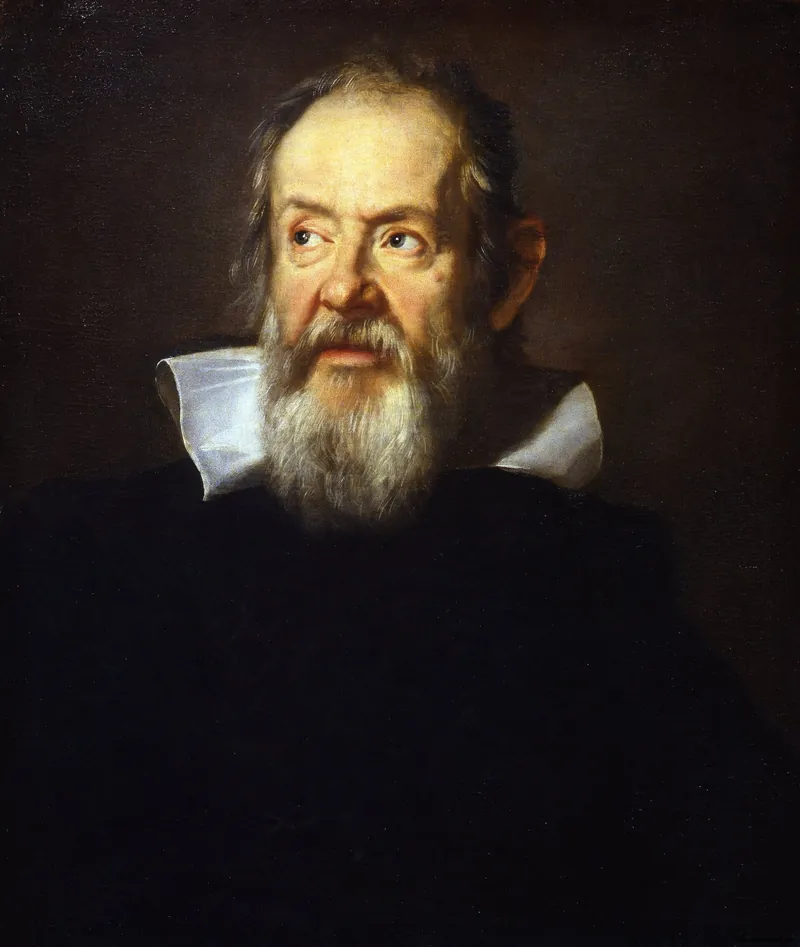
Galileo’s telescope
In his 1610 book Sidereus Nuncius, Galileo reported that through a telescope parts of the Milky Way resolved into many stars. Library of Congress
Island universes
In 1750 the English astronomer Thomas Wright suggested the Milky Way was a flat layer of stars, with our solar system part of it. Library of Congress
In 1755 the philosopher Immanuel Kant called the faint nebulae “island universes”. Library of Congress
In the 1780s William Herschel surveyed the stars in different directions and found them much denser on one side of the sky. Library of Congress
Moving the Sun off-centre
In 1917 Harlow Shapley used globular clusters to show the galaxy is immense, about 100,000 light-years across, with the Sun nearer the edge than the centre. Britannica, structure
Only in the 1920s was it confirmed that many nebulous ‘stars’ were whole other galaxies far beyond our own. Library of Congress
The Magellanic Clouds were recognised early in the 20th century as companions of our galaxy. Britannica
Mapping the arms
Jan Oort mapped the first hints of the spiral structure with radio observations in the 1950s. ESA, Gaia
The bar wasn’t proven until 2005, when a team used NASA’s Spitzer Space Telescope to survey stars at the centre in infrared light, which gets through the dust. Royal Observatory
In 2008 NASA’s Spitzer team found two major arms, Scutum-Centaurus and Perseus, coming off the ends of the bar; before that four major arms had been assumed. NASA, Milky Way map
Gaia
In April 2018 ESA’s Gaia released a catalogue of nearly 1.7 billion stars, after 22 months of charting the sky. ESA, 2018
Even so, Gaia’s survey covered almost two billion stars, only about 1% of the galaxy’s total. ESA, guide
Later Gaia star maps gave clear evidence for four arms, an ESA scientist says. ESA, Gaia
Timeline
- Ancient Greece In ancient Greece, Democritus suggested the band might be made of distant stars. Library of Congress
- 1610 In his 1610 book Sidereus Nuncius, Galileo reported that through a telescope parts of the Milky Way resolved into many stars. Library of Congress
- 1750 In 1750 the English astronomer Thomas Wright suggested the Milky Way was a flat layer of stars, with our solar system part of it. Library of Congress
- 1755 In 1755 the philosopher Immanuel Kant called the faint nebulae “island universes”. Library of Congress
- 1780s In the 1780s William Herschel surveyed the stars in different directions and found them much denser on one side of the sky. Library of Congress
- 1912 As far back as 1912, astronomers realised Andromeda, then thought to be only a nebula, was heading our way. NASA, 2025
- 1917 In 1917 Harlow Shapley used globular clusters to show the galaxy is immense, about 100,000 light-years across, with the Sun nearer the edge than the centre. Britannica, structure
- 1920s Only in the 1920s was it confirmed that many nebulous ‘stars’ were whole other galaxies far beyond our own. Library of Congress
- 1950s Jan Oort mapped the first hints of the spiral structure with radio observations in the 1950s. ESA, Gaia
- 2005 The bar wasn’t proven until 2005, when a team used NASA’s Spitzer Space Telescope to survey stars at the centre in infrared light, which gets through the dust. Royal Observatory
- 2008 In 2008 NASA’s Spitzer team found two major arms, Scutum-Centaurus and Perseus, coming off the ends of the bar; before that four major arms had been assumed. NASA, Milky Way map
- April 2018 In April 2018 ESA’s Gaia released a catalogue of nearly 1.7 billion stars, after 22 months of charting the sky. ESA, 2018
- June 2025 In 2025 a new study using Hubble and Gaia data found only about a 50-50 chance of the two galaxies colliding in the next 10 billion years. NASA, 2025
Next: myths →